


MPLS to SD-WAN Migration: A Guide for Businesses
MPLS to SD-WAN Migration: Why Businesses Are Making the Switch
An MPLS to SD-WAN migration is becoming a strategic priority for organisations looking to modernise their network infrastructure, improve cloud performance and support increasingly distributed workforces. While MPLS has long been the standard for connecting business locations, today’s digital-first operating environments demand greater flexibility, visibility and scalability.
As organisations adopt more cloud applications, support hybrid working and increase bandwidth-intensive workloads, traditional MPLS network architectures can become more complex and costly to scale. SD-WAN solutions provide a modern alternative, enabling businesses to optimise traffic, improve application performance and gain greater control over their wide area network.
This guide explains the differences between MPLS and SD-WAN, why businesses are making the switch and how to plan a successful migration while minimising risk and disruption.
What is MPLS?
Multi-Protocol Label Switching (MPLS) is a networking technology used to connect business locations through private, carrier-managed circuits. Rather than sending traffic across the public internet, MPLS creates dedicated pathways between sites to deliver consistent connectivity and performance.
For many years, MPLS has been the preferred option for organisations operating across multiple locations because it offers:
- Reliable connectivity
- Predictable performance
- Private connectivity
- Consistent support for business-critical applications
While these advantages remain relevant, many MPLS networks were designed for centralised data centres rather than today’s cloud-first environments. As organisations adopt more SaaS applications and hybrid working models, networking requirements have evolved.
What is SD-WAN?
Software-Defined Wide Area Networking (SD-WAN) is a modern approach to managing connectivity across a wide area network. It intelligently routes traffic across multiple connection types such as broadband, fibre, mobile and MPLS services.
By continuously assessing network conditions, SD-WAN directs applications across the most suitable path to improve user experience and application performance.
Key advantages include:
- Greater network visibility
- Traffic optimisation
- Improved cloud application performance
- More flexible connectivity
- Centralised network management
For businesses pursuing network modernisation, SD-WAN provides a scalable platform that supports cloud adoption and distributed workforces.
Looking for a deeper understanding of how SD-WAN supports cloud connectivity, security and business transformation? Download our Secure SD-WAN: Network to the Cloud report for practical insights into building a high-performance, secure network for modern business environments.
Learn more about Viatel’s SD-WAN solutions.
Why Are Businesses Migrating from MPLS to SD-WAN?
The shift towards SD-WAN is being driven by changing business needs and application requirements.
Common factors include:
- Increased cloud adoption
- Hybrid and remote working
- Growing bandwidth demands
- Cost optimisation
- Greater need for agility and scalability
Traditional MPLS architectures were designed around data centre connectivity. Modern organisations require direct, reliable access to cloud applications from multiple locations and devices.
As cloud usage grows, traditional MPLS architectures can create bottlenecks for internet-bound traffic. SD-WAN helps optimise traffic flows and improve access to cloud applications.
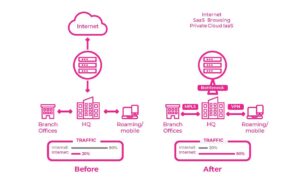
An MPLS to SD-WAN migration enables businesses to support digital transformation, improve network performance and build a more adaptable connectivity strategy for the future.
MPLS vs SD-WAN: What’s the Difference?
While both technologies support wide area networking, they differ in how they manage connectivity, performance and scalability.
Feature | MPLS | SD-WAN |
Connectivity | Private circuits | Multiple connection types |
Scalability | Slower to deploy | Rapid deployment |
Cloud Performance | Limited optimisation | Cloud-first design |
Visibility | Limited | Real-time visibility |
Flexibility | Lower | High |
For many organisations, the biggest advantage of SD-WAN is its ability to dynamically route traffic according to application requirements and network conditions.
This enables:
- Better cloud application performance
- Improved network visibility
- Faster site deployment
- Greater network resilience
- More flexible business connectivity
As cloud adoption continues to grow, SD-WAN is increasingly viewed as a strategic platform for long-term network modernisation rather than simply a replacement for MPLS.
What Are the Benefits of SD-WAN
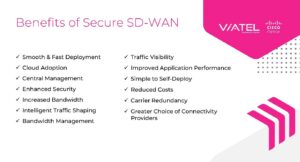
SD-WAN delivers business and operational benefits that extend beyond connectivity alone.
Improved Application Performance
- Prioritises critical applications
- Improves Microsoft 365 and cloud performance
- Supports application-aware routing
Increased Network Resilience
- Automatic failover between connections
- Reduced downtime
- Enhanced business continuity
Better Visibility and Control
- Centralised management
- Real-time monitoring
- Faster troubleshooting
Greater Scalability
- Easier onboarding of new sites
- Supports business growth
- Simplifies distributed network management
Learn more about Viatel’s Networks & Connectivity Solutions.
Common Challenges When Migrating from MPLS to SD-WAN
Although the benefits are significant, successful migrations require careful planning and execution.
Common challenges include:
- Legacy infrastructure considerations that may affect integration and deployment
- Security planning to maintain protection throughout the migration process
- Application assessment to ensure business-critical services perform as expected
- User adoption and operational readiness for new management processes
Businesses must also consider factors such as routing configurations, firewall policies, network segmentation and business continuity requirements.
Addressing these challenges early helps reduce risk and creates a smoother transition from MPLS to SD-WAN.
How to Plan a Successful MPLS to SD-WAN Migration

A successful MPLS to SD-WAN migration begins with a structured approach that balances technical requirements with business objectives.
Migration Checklist
- Assess existing network performance
- Review application requirements
- Identify business objectives
- Evaluate security requirements
- Develop a phased rollout plan
Viatel’s migration methodology follows a proven five-stage framework designed to minimise disruption and maintain network availability throughout the project.
Migration at a Glance
Step | Focus | Outcome |
1) Take Stock | Inventory current network | Full picture of what needs replacing |
2) Migration Planning | Define cutover process | Custom project plan |
3) Equipment Configuration | Prepare and test hardware | Devices ready for installation |
4) Installation & Deployment | Prepare and test hardware | Devices ready for installation |
5) Service Management | Tarin, monitor and secure | Ongoing operational support |
Step 1: Take Stock
Before any migration begins, it is essential to understand the current environment. This involves documenting existing services, equipment, connectivity and IP addressing schemes.
Typical assessments include:
- Site-to-site VPN configurations
- DNS server locations
- Fixed IP assignments
- DHCP requirements
- Static routes
A detailed network diagram is also developed, capturing data networks, voice networks, routing protocols, firewall configurations and SD-WAN connectivity requirements. This provides a complete picture of the environment before any changes are made.
Step 2: Migration Planning
Once the discovery phase is complete, a tailored migration plan is created based on existing infrastructure and future business requirements.
Person Responsible | Task |
Customer | Provide current network diagram |
Customer | Review IP addressing requirements |
Customer + Viatel | Conduct solution design workshops |
Customer + Viatel | Define staging, testing, deployment and training requirements |
This collaborative planning process helps ensure all stakeholders understand timelines, responsibilities and expected outcomes before implementation begins.
Step 3: Equipment Configuration
Prior to deployment, all SD-WAN hardware is configured and tested.
Customer responsibilities include:
- Reviewing IP addressing
- Identifying critical applications
- Reviewing edge network requirements
- Supporting policy routing assessments
Viatel responsibilities include:
- Configuring SD-WAN appliances
- Updating network designs
- Managing equipment delivery
- Conducting hardware and software testing
- Performing failover validation
A defined rollback plan is also established to reduce risk if unexpected issues arise during deployment.
Step 4: Installation & Deployment
Deployment typically follows a phased approach starting with hub locations before moving to remote sites.
Key activities include:
- Validating equipment readiness
- Testing WAN, LAN and internet connectivity
- Verifying application performance
- Completing acceptance testing at each site
- Maintaining rollback procedures throughout deployment
One important best practice is running SD-WAN alongside the existing MPLS network during rollout. This allows organisations to validate performance and functionality before fully retiring MPLS services.
Step 5: Service Management
Migration does not end when the network goes live.
Ongoing activities include:
- Training administrators
- Providing dashboard access
- Establishing monitoring thresholds
- Managing alerts and escalation procedures
- Supporting operational optimisation
This ensures organisations continue to receive value from their SD-WAN investment long after deployment is complete.
Security Considerations During Migration
Security should remain a core priority throughout every stage of an MPLS to SD-WAN migration.
Modern SD-WAN architectures can enhance both security and performance when properly designed and managed.
Areas to consider include:
- Network segmentation to isolate traffic and applications
- Secure connectivity between users, sites and cloud services
- Traffic inspection to identify potential threats
- Policy-based controls across the network
- Encrypted communications between locations
Depending on requirements, organisations may also deploy:
- Intrusion prevention systems
- DDoS protection
- Anti-virus filtering
- Anti-spam services
- Web content filtering
- VPN encryption services
- Web application security controls
When implemented correctly, SD-WAN can improve security posture while simultaneously enhancing application performance and user experience.
How Viatel Supports MPLS to SD-WAN Migration
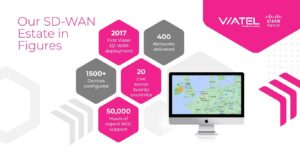
Successful migration projects require more than technology. They require careful planning, proven processes and ongoing support.
Viatel supports organisations throughout the entire migration lifecycle, including:
- Discovery and assessment
- Network design
- Migration planning
- Equipment staging and testing
- Installation and deployment
- Monitoring and optimisation
Viatel’s approach prioritises maintaining business continuity by keeping MPLS services operational during phased deployments until SD-WAN performance has been fully validated. Combined with structured testing, training and ongoing management, this helps reduce risk while supporting long-term network performance and resilience.
Building Your MPLS to SD-WAN Strategy
As businesses become increasingly dependent on cloud applications, distributed teams and always-on connectivity, network performance has never been more important.
An MPLS to SD-WAN migration can help improve application performance, strengthen network resilience, increase visibility and create a more agile foundation for future growth.
Whether you are assessing your existing MPLS network or planning a broader network modernisation programme, taking a structured approach is critical to success.
Talk to Viatel about building an SD-WAN strategy that improves performance, resilience and scalability across your organisation.