

Choosing the Right Data Centre Solution in Ireland
As organisations become increasingly reliant on digital services, infrastructure decisions have moved beyond the IT department and into the boardroom. Choosing the right data centre solutions that Irish businesses can depend on is no longer simply a technical consideration. It is a decision that affects performance, resilience, security, scalability and long-term growth.
Whether you’re evaluating colocation options, exploring cloud adoption, reviewing data centre hosting or building a hybrid IT infrastructure, understanding the available choices is essential. This guide explains the different types of data centre services organisations in Ireland can access and the key factors to consider when selecting the right solution for your business.
What Is a Data Centre?
A data centre is a secure facility designed to host and manage the technology that businesses depend on every day. This includes servers, storage systems, networking equipment, applications and business-critical data.
Modern data centre solutions that organisations use provide the foundation for digital operations by ensuring infrastructure remains available, connected and protected.
Data centres support:
- Business operations by keeping applications and systems running reliably
- Security through physical protection, access controls and monitoring
- Connectivity by linking users, applications and cloud platforms
- Cloud services as the infrastructure underpinning public, private and hybrid cloud environments
Why Data Centre Strategy Matters More Than Ever
The way businesses consume technology has changed significantly over the past decade. Cloud applications, remote working, artificial intelligence and growing data volumes have increased demands on infrastructure.
Several factors are driving organisations to reassess their data centre strategy:
- Increased reliance on cloud applications that require dependable connectivity and performance
- Growing volumes of business data that need secure storage and management
- Demand for always-on services from customers, employees and partners
- Cybersecurity and compliance requirements that place greater importance on secure infrastructure
These decisions now influence much more than technology performance. They affect customer experience, operational efficiency, regulatory compliance and business continuity.
As information storage requirements grow rapidly, in-country data centres can also help Irish organisations keep data closer to their users, operations and regulatory environment. This can support better performance, clearer data residency controls and greater confidence in how business-critical information is stored and managed.
For this reason, data centre investments should be viewed as strategic business decisions rather than purely IT purchases.
What Types of Data Centre Solutions Are Available?
There is no single approach that suits every organisation. The most appropriate solution depends on business goals, operational requirements and existing technology investments.
Colocation
Colocation services allow organisations to place their own servers and infrastructure within a professionally managed data centre facility.
Benefits include:
- Control of infrastructure while retaining ownership of hardware
- Enhanced security through secure facilities and controlled access
- Reduced facility management requirements compared to operating a private data centre
- Access to resilient power, cooling and networking
Many businesses choose colocation when they require high levels of control but want to avoid the costs and complexity of running their own facility.
Colocation can suit a range of requirements, from hosting a single server to supporting a fully managed private suite.
For organisations considering colocation, Viatel’s colocation services provide secure infrastructure designed to support business-critical workloads in a properly powered, cooled, protected and connected facility.
Cloud infrastructure
Cloud infrastructure provides access to computing resources delivered as a service.
Advantages include:
- Flexible and scalable environments that can expand as needs change
- Reduced hardware investment through provider-managed infrastructure
- Rapid deployment of new services and applications
- Operational simplicity through outsourced infrastructure management
Cloud environments can help organisations accelerate innovation while improving agility and reducing upfront capital expenditure.
Viatel’s cloud transformation solutions can help organisations modernise infrastructure, improve scalability and build a clearer path from legacy systems to more flexible cloud environments.
Hybrid infrastructure
Many organisations now adopt a hybrid cloud approach that combines dedicated infrastructure with cloud services.
Benefits include:
- Flexibility to place workloads where they make most sense
- Performance optimisation for critical applications
- Scalability through cloud resources when required
- Improved cost management by matching workloads to suitable environments
Hybrid infrastructure has become a popular choice because it balances control, performance and flexibility while supporting evolving business needs.
Colocation vs Cloud: Which Is Right for Your Business?
Choosing between colocation and cloud infrastructure depends on priorities such as control, scalability, compliance and cost structure.
Feature | Colocation | Cloud infrastructure |
Hardware ownership | Customer-owned | Provider-managed |
Scalability | Moderate | High |
Control | High | Lower |
Security control | High | Shared responsibility |
Cost model | Capital investment | Operational expense |
Flexibility | Moderate | High |
Both options can deliver excellent outcomes and, increasingly, organisations are selecting hybrid models that combine the strengths of both approaches.
Key Factors to Consider When Choosing a Data Centre Solution
The right business data centre solutions should support not only today’s requirements but future growth and operational resilience.
Security
Infrastructure security extends beyond cybersecurity.
Consider:
- Physical security measures protecting infrastructure assets
- Access controls that limit entry to authorised personnel
- Monitoring systems providing continuous oversight
Secure data centre services should help minimise risk while supporting governance requirements.
Connectivity
A data centre is only as effective as the networks connecting it.
Evaluate:
- Network performance and speed
- Carrier Diversity to reduce reliance on a single provider
- Low-Latency Connectivity for critical applications
Reliable network connectivity supports application performance and user experience.
Scalability
Scalability should be assessed early.
Look for:
- Capacity to expand as requirements evolve
- Infrastructure flexibility to support changing workloads
- Adaptability for cloud and hybrid strategies
Compliance
Regulatory obligations continue to increase for many industries.
Important considerations include:
- Industry regulations
- Data governance requirements
- Security standards
- Auditing and reporting capabilities
Certified data centres can also support governance, audit and compliance requirements. Viatel data centres include the recognised certification, ISO 27001, and also achieved PCI DSS v4.0.1 compliance for its Irish data centre services, specifically relating to colocation services.
Viatel’s Profile Park Data Centre has also received ISO 9001, ISO 14001 and ISO 50001 certifications.
Business continuity
Infrastructure resilience directly impacts operational continuity.
Evaluate:
- Backup power systems
- Redundancy across critical components
- Disaster recovery support
- High availability capabilities
High availability should be built into the infrastructure, connectivity and support model, not treated as an add-on.
The Role of Connectivity in Data Centre Performance
Data centre infrastructure and network connectivity are inseparable.
Even the most advanced facility can struggle to deliver value if connectivity is unreliable, congested or poorly designed.
Connectivity supports:
- Cloud services by enabling seamless access to applications and resources
- Business applications that require consistent performance
- Remote users accessing systems from multiple locations
- Data exchange between offices, cloud environments and partners
A strong network foundation also supports infrastructure management, business continuity and digital transformation initiatives.
Viatel’s networks and connectivity solutions help organisations create resilient connectivity frameworks that support modern infrastructure requirements.
Data centre performance and connectivity checklist
Area | Key questions |
Connectivity | Are there multiple carrier options available? |
Performance | Can the network support business-critical applications? |
Resilience | Are redundant network paths in place? |
Cloud access | Is connectivity optimised for cloud services? |
Growth | Can connectivity scale alongside the business? |
Common Mistakes Businesses Make When Choosing a Data Centre Solution
Many organisations focus heavily on immediate requirements while overlooking future business needs.
Common mistakes include:
Focusing on cost alone
The lowest-cost option is not always the most cost-effective.
Businesses should consider:
- Reliability
- Performance
- Support levels
- Long-term value
Underestimating growth requirements
Infrastructure decisions should account for future expansion.
Failing to plan for growth can result in costly migrations and operational disruption.
Ignoring connectivity needs
Connectivity is often treated as a separate decision when it should be considered alongside infrastructure planning.
Weak connectivity can undermine an otherwise well-designed data centre strategy.
Lack of business continuity planning
Many organisations underestimate the importance of resilience.
Without appropriate redundancy, disaster recovery and business continuity solutions, outages can have significant operational consequences.
The best approach is to evaluate the full environment holistically, considering technology, people, processes and future objectives together.
How to Choose the Right Data Centre Partner
Selecting the right partner is just as important as selecting the right solution.
Key questions to ask include:
- Does the facility support future growth?
- What resilience measures are in place?
- What connectivity options are available?
- What level of support is provided?
- How does the provider support hybrid cloud strategies?
- Can the solution scale with business requirements?
A strong partner should act as a trusted advisor rather than simply a provider of infrastructure.
without needing their own team on site.
At Viatel Technology Group, organisations benefit from consultative guidance across connectivity, cloud infrastructure, colocation services and business continuity planning. We also provide day-to-day support, 24/7 hands-on assistance that can help organisations manage routine tasks, maintenance and troubleshooting.
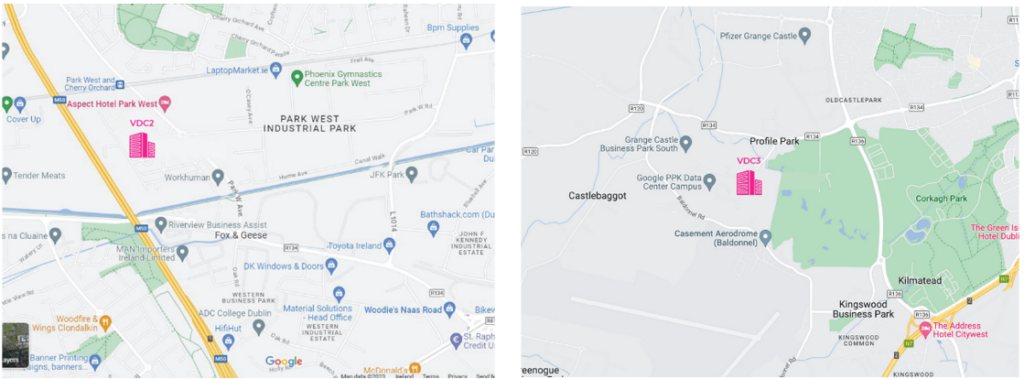
VDC2 Park West VDC3 Profile Park
Conclusion: Building the Right Infrastructure for the Future
There is no one-size-fits-all approach to data centre strategy. The right solution depends on your organisation’s business objectives, security requirements, growth plans and operational needs.
Whether you choose colocation, cloud or a hybrid model, success depends on matching the right environment to the right workload.
Talk to Viatel about designing a data centre strategy that supports your business today and into the future.
Contact the team today: Get in touch with Viatel Technology Group