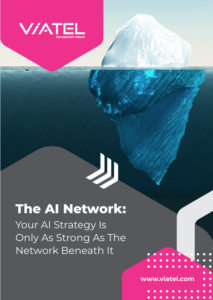


Viatel Technology Group warns AI strategies will stall unless enterprise networks are ready
Viatel, one of Ireland’s leading enterprise connectivity and technology providers, is warning Irish business and technology leaders that AI strategies risk stalling unless enterprise networks are prepared to support the speed, scale and security demands of AI-driven workloads.
The company says business leaders should treat network readiness as an early part of AI planning, not a downstream technical task. Before they scale AI across the business, enterprise leaders need to understand whether their existing connectivity, resilience, security controls and hybrid cloud performance can support it.
Why network readiness matters for AI
Recent Cisco and Foundry research found that AI-related network traffic has risen by 34% over the past year, with a further 96% growth expected in the next 12 months. The same research found that 73% of organisations already face, or expect to face, network capacity limitations within two years.
This creates both a risk and an opportunity for organisations moving quickly from AI experimentation to execution. Traditional enterprise networks were built around more predictable usage patterns such as email, collaboration tools and cloud applications. AI introduces more continuous, automated and latency-sensitive traffic, often across cloud, data centre, edge and office environments.
- AI performance depends on low latency, resilient connectivity and strong visibility across the network.
- AI adoption increases the need for secure data movement, governance and control.
- Infrastructure gaps can delay rollouts, weaken customer experience and increase operational risk.
- Network readiness is becoming central to AI return on investment.
Viatel: AI success depends on the foundations beneath it
Eilish O’Connor, Director of Strategy and AI at Viatel Technology Group, said:
The next strategic question is no longer simply whether an organisation has an AI strategy. It is whether its network can carry it. AI initiatives will not fail because the ambition is wrong. They will stall if the foundations are not ready. For leaders, this means looking at networks, cloud, data and cybersecurity as one connected foundation for AI.
Viatel believes this assessment should include resilience across critical sites, secure data movement, data sovereignty, infrastructure that is hybrid by design, and clear, real-time visibility of latency, traffic patterns, capacity, security events and service health. For AI, organisations need to plan connectivity from the outset so it works consistently across cloud, edge, data centre and on-premise environments, instead of adapting it after deployment. This helps organisations spot bottlenecks early, manage risk, move data securely, support latency-sensitive workloads and scale AI without creating isolated systems or unnecessary complexity.
O’Connor added:
AI is changing how networks behave, not just how much traffic they carry. Organisations that modernise now will be better placed to scale AI securely, responsibly and commercially. Those that wait may find that their AI ambition moves faster than their infrastructure can support.
Viatel says its own Customer Zero approach has shaped this view. By adopting and testing AI internally before guiding customers, the company has seen first-hand how quickly AI can expose weaknesses in data, governance, security and network foundations. Through its Microsoft partnership and Customer Zero experience, Viatel is using these insights to support secure, scalable AI adoption across enterprise environments. You can read Viatel’s report on The AI Network here .